Tell us about the job
Takes about a minute. No obligation.
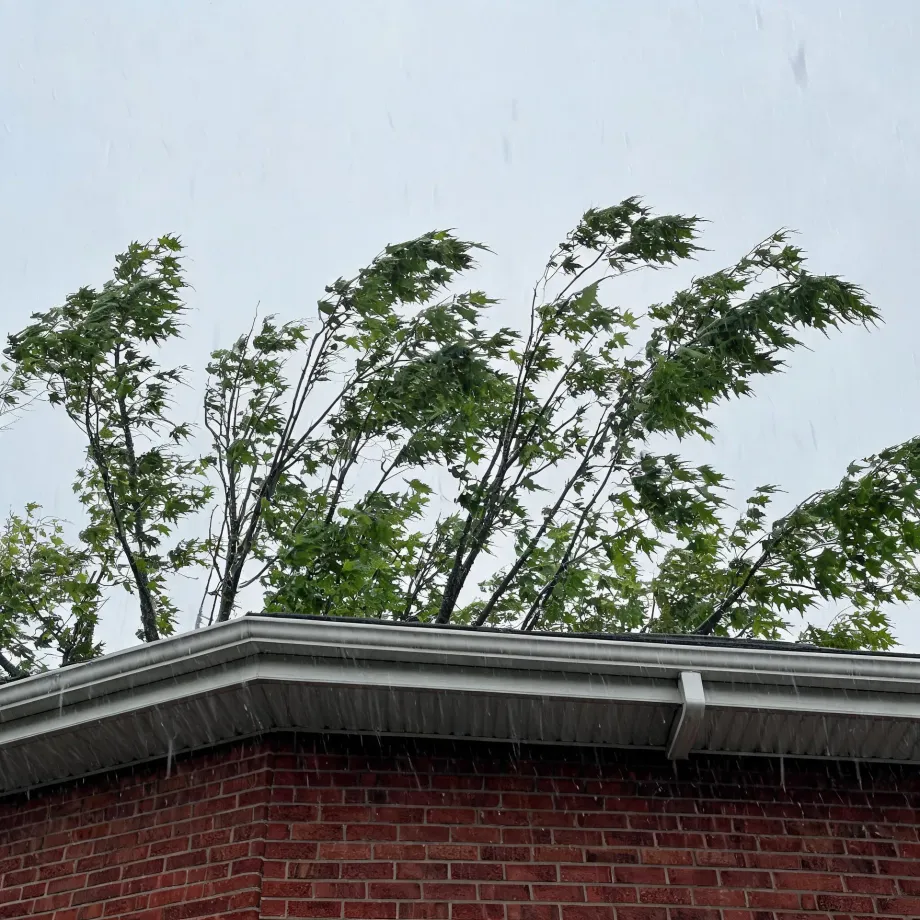
A contractor quoting a boiler repair in Caroline County has to sort out what the equipment itself has contributed to the failure before weather enters the picture at all. 119 severe weather events were recorded in Caroline County, Virginia between 2015 and 2024. That puts this area roughly in the middle of the national range, which means severe weather is a real but occasional pressure on systems here rather than a grinding constant. Heat exchangers crack, controls fail, and circulator pumps seize mostly because of age, installation quality, and how the system has been serviced over its life. Weather is worth checking as a factor, but in a county at this level of exposure it rarely turns out to be the main one.
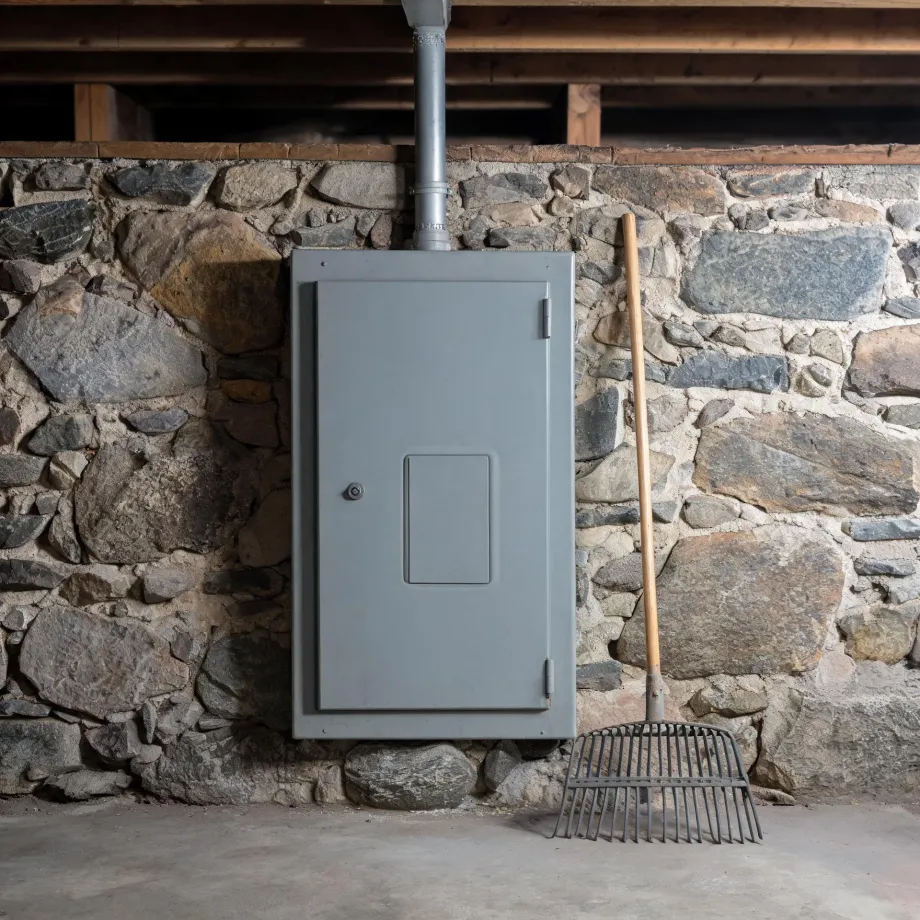
Boiler components that have run through this many heating seasons wear in patterns a contractor reads by opening the unit: cracked heat exchangers, seized circulator pumps, corroded zone valves. Half the homes in Caroline County, Virginia were built in 1993 or earlier (2020-2024 ACS 5-year). That span puts much of the county's heating equipment into a parts tier where some components are discontinued, some are available only through specialty suppliers, and a few require fabrication or cross-referencing to a current equivalent. What a repair costs here often comes down to that supply question more than the labor.
The Parts of a Boiler a Contractor Checks First
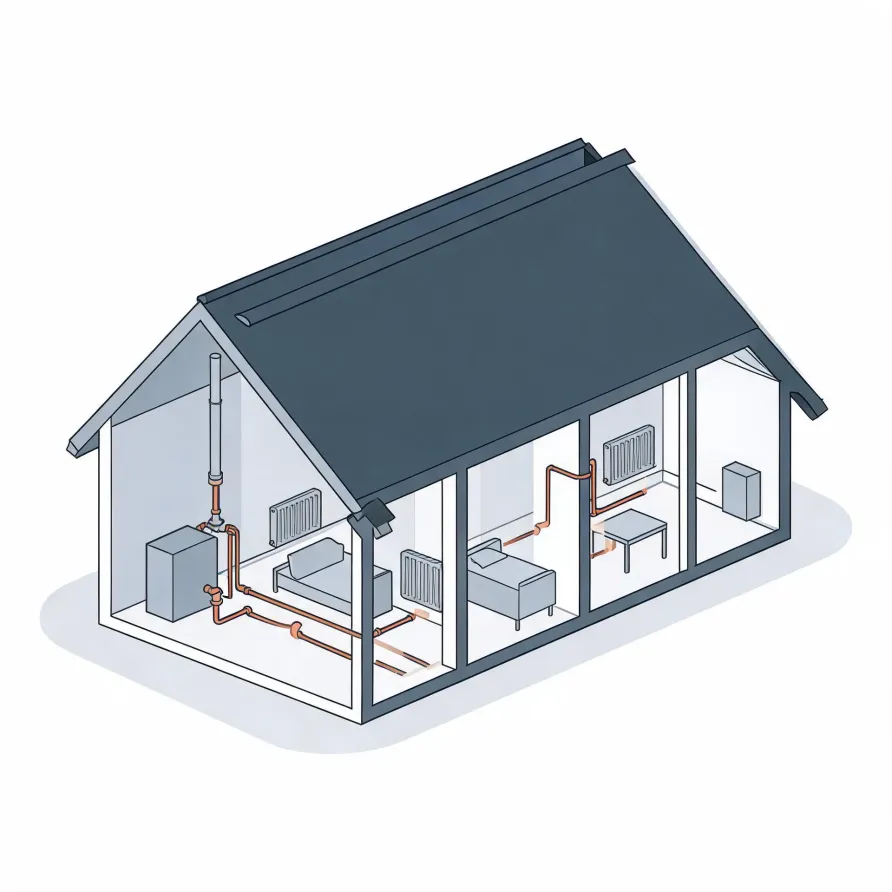
The boiler itself sits in the basement or a utility room and is the piece a contractor goes to first. It heats water and sends it through the house. When a boiler fails, the fault usually lives here, in the heat exchanger, the burner, or the controls mounted on the unit.
Radiators or baseboard convectors sit in each room and are where the heat actually enters the living space. Connecting them to the boiler are supply and return pipes, and on the boiler end a circulator pump moves the water through that loop. A faulty pump, a stuck zone valve, or a waterlogged expansion tank can each kill heat to part or all of the house without touching the boiler itself.
The drawing shows a typical layout, and a licensed contractor determines which components apply to your specific system.
Get matched in Caroline CountyCaroline County, by the numbers
119 severe weather events were recorded in Caroline County, Virginia between 2015 and 2024.
NOAA National Centers for Environmental Information, Storm Events Database, bulk CSV export, events 2015-01-01 through 2024-12-31.Half the homes in Caroline County, Virginia were built in 1993 or earlier (2020-2024 ACS 5-year).
U.S. Census Bureau, 2020-2024 American Community Survey 5-Year EstimatesCaroline County, Virginia holds 12,920 housing units (2020-2024 ACS 5-year).
U.S. Census Bureau, 2020-2024 American Community Survey 5-Year EstimatesOwners occupy 82.3% of the occupied homes in Caroline County, Virginia (2020-2024 ACS 5-year).
U.S. Census Bureau, 2020-2024 American Community Survey 5-Year EstimatesCodes & Standards Governing Boiler and HVAC Repair in Caroline County, Virginia2 sourced rules and standards
Licensing and Legal Requirements in Caroline County, Virginia
Virginia’s contractor licence classes start above $1,000: the entry class covers a single contract or project over $1,000 but less than $30,000, or less than $250,000 of work in any 12-month period, with larger classes above that.
Virginia requires a contractor licence: no person may engage in, or offer to engage in, contracting work in the Commonwealth without one.
Weather Stress on Boilers in Caroline County
Boilers in Caroline County work against whatever the climate throws at them, and that workload shows up over time as wear, pressure on components, and repair calls. The chart below tracks recorded severe weather events in the county so you can see what local conditions actually look like.
119 severe weather events, 2015–2024. Source: NOAA National Centers for Environmental Information, Storm Events Database.