Tell us about the job
Takes about a minute. No obligation.
A boiler breaking down in Clarke County has almost certainly been carrying ordinary residential load, not an extraordinary one. 106 severe weather events were recorded in Clarke County, Virginia between 2015 and 2024. At that rate, severe weather is a real but unremarkable part of operating here, and a contractor diagnosing a failed heat exchanger or a seized pump will look first at how old the unit is and when it was last serviced. Those two factors explain most of what gets found. The weather record sets the background; the wear patterns inside the unit tell the repair story.
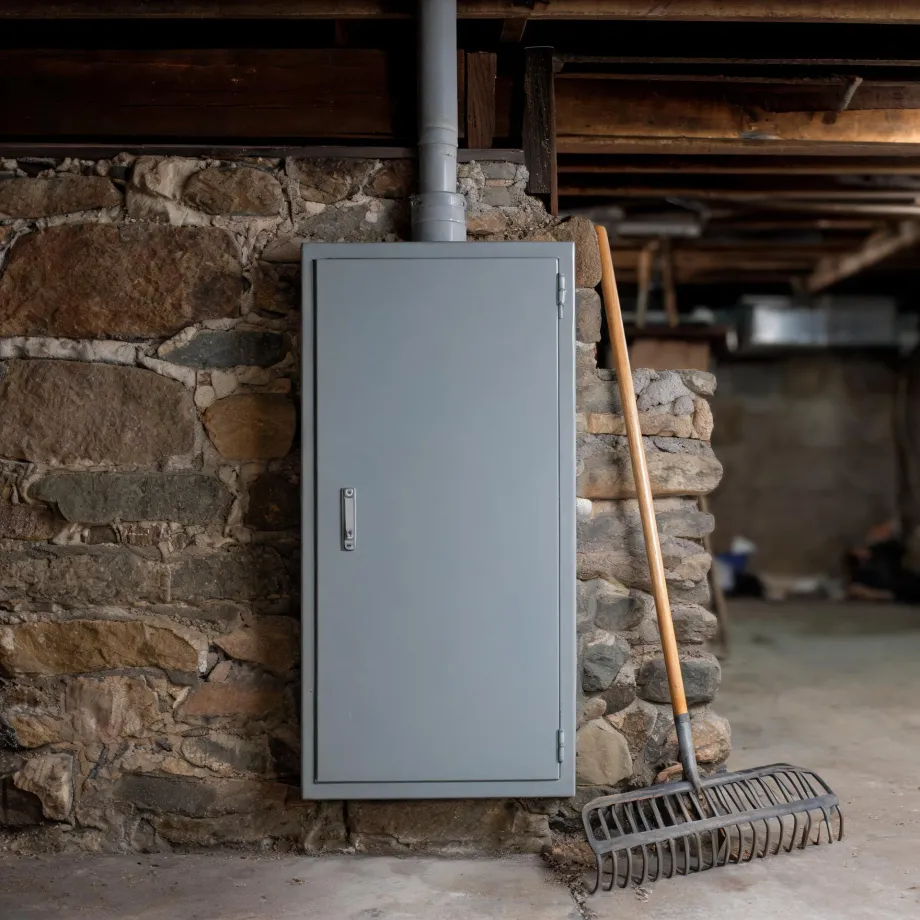
Piping in a house this old rarely looks the way it was drawn. Half the homes in Clarke County, Virginia were built in 1980 or earlier (2020-2024 ACS 5-year). A boiler that throws a fault code in stock like this may need only a component swap, but a contractor opening the system also finds what generations of patch repairs left behind: valves added, zones rerouted, expansion tanks moved or forgotten. What those modifications are determines whether the repair is a single fix or the start of a longer conversation about the distribution system. The boiler itself is often the straightforward part.
The Parts of a Boiler a Contractor Checks First
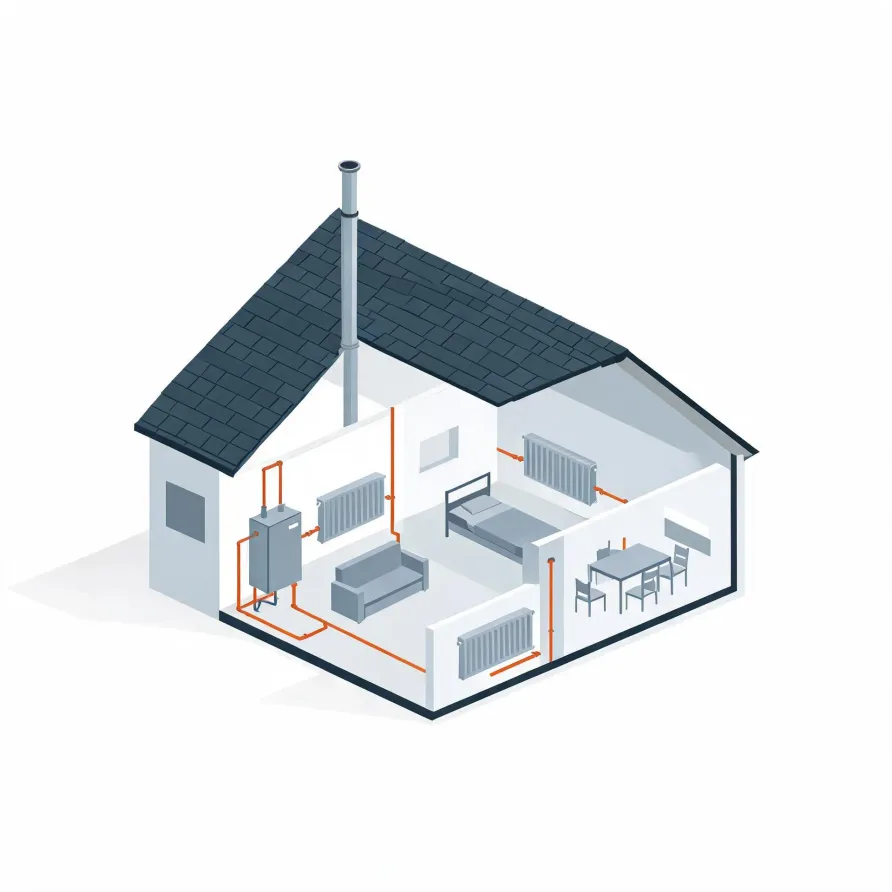
The boiler itself sits in the basement or mechanical room and is the piece a contractor goes to first. It heats water and pushes it through the system. When heat stops reaching the rooms, or the unit cycles oddly or shuts off early, the burner assembly, heat exchanger, or pressure relief valve inside the boiler is usually where the problem lives.
From the boiler, supply pipes carry hot water to radiators or baseboard units positioned along the exterior walls of each room, and return pipes bring the cooled water back. The circulator pump moves water through that loop, and the expansion tank nearby absorbs pressure changes as the water heats. A failed pump or a waterlogged expansion tank will show up fast in how the system behaves.
The drawing shows a representative layout, and a licensed contractor determines which components apply and what condition they are in for your specific home.
Get matched in Clarke CountyClarke County, by the numbers
106 severe weather events were recorded in Clarke County, Virginia between 2015 and 2024.
NOAA National Centers for Environmental Information, Storm Events Database, bulk CSV export, events 2015-01-01 through 2024-12-31.Half the homes in Clarke County, Virginia were built in 1980 or earlier (2020-2024 ACS 5-year).
U.S. Census Bureau, 2020-2024 American Community Survey 5-Year EstimatesClarke County, Virginia holds 6,553 housing units (2020-2024 ACS 5-year).
U.S. Census Bureau, 2020-2024 American Community Survey 5-Year EstimatesOwners occupy 81.5% of the occupied homes in Clarke County, Virginia (2020-2024 ACS 5-year).
U.S. Census Bureau, 2020-2024 American Community Survey 5-Year EstimatesBoiler Repair Rules & Standards for Clarke County, Virginia2 sourced regulations and codes
What Clarke County, Virginia Requires for HVAC Repair
Virginia’s contractor licence classes start above $1,000: the entry class covers a single contract or project over $1,000 but less than $30,000, or less than $250,000 of work in any 12-month period, with larger classes above that.
Virginia requires a contractor licence: no person may engage in, or offer to engage in, contracting work in the Commonwealth without one.
Severe Weather Events in Clarke County, Virginia
Weather extremes put direct stress on boiler systems, forcing them to run harder and longer than baseline conditions demand. How much of that pressure Clarke County equipment absorbs is a local fact, and it shapes what repair work looks like here.
106 severe weather events, 2015–2024. Source: NOAA National Centers for Environmental Information, Storm Events Database.