Tell us about the job
Takes about a minute. No obligation.
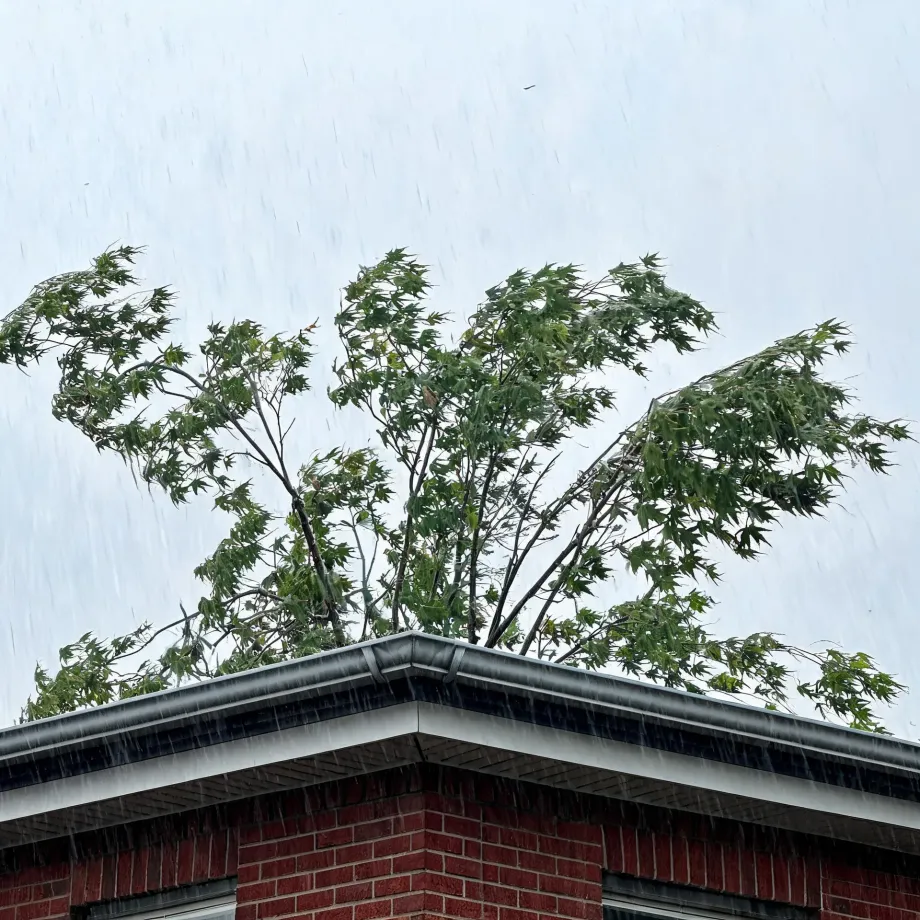
A contractor quoting a boiler installation in Prince Edward County has to settle on what the local climate actually demands before they can size equipment correctly. 101 severe weather events were recorded in Prince Edward County, Virginia between 2015 and 2024. At roughly the national midpoint, that record puts this county in neither an extreme weather zone nor a sheltered one. Severe weather is a real but not dominant factor in what a boiler here has been asked to do, which means the contractor's sizing decision turns more sharply on the home's construction, heat loss, and how well the previous system was installed than on storm history alone.
Existing ductwork and pipe runs are what a contractor prices before anything else on a boiler job here. Half the homes in Prince Edward County, Virginia were built in 1980 or earlier (2020-2024 ACS 5-year). A house from that era was built around a distribution system designed for whatever heated it originally, and that system may not move water or air the way a new boiler needs it to. A contractor will open walls, check pipe gauges, and assess radiators or baseboards before the equipment selection is settled. The layout of what is already there shapes the scope more than the unit itself does.
What a Boiler Installation Covers
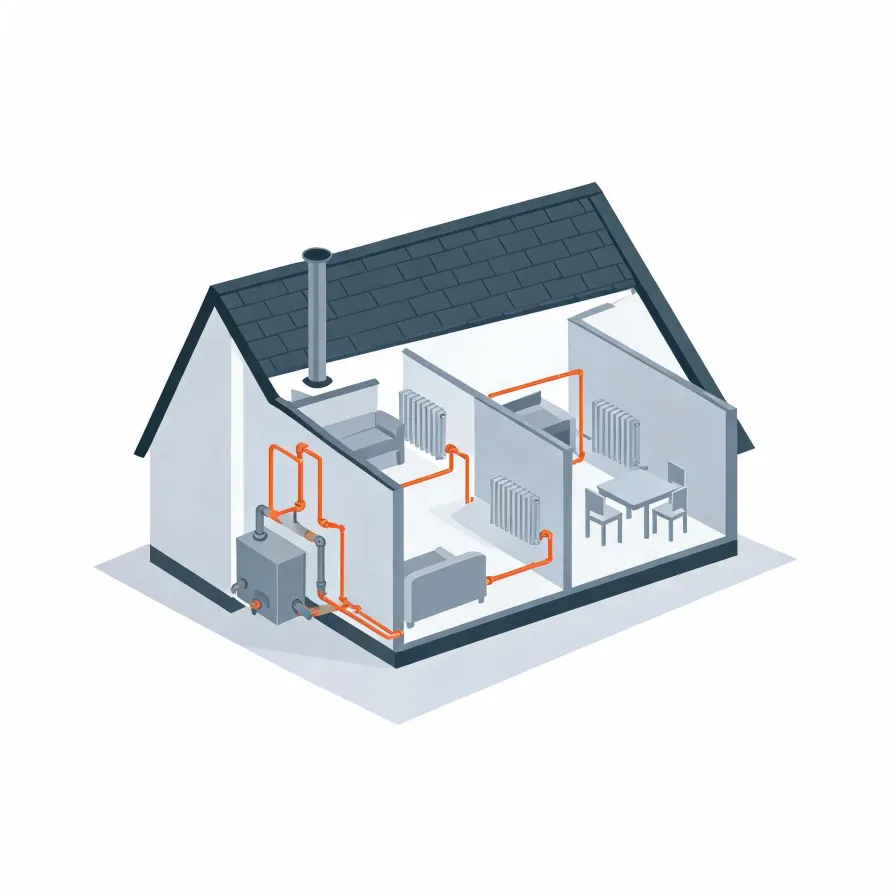
The boiler itself sits in a mechanical room, basement, or utility closet and is the heart of the system. It heats water that then travels out to the rest of the house. A contractor also installs the expansion tank nearby, which absorbs pressure changes as the water heats and cools.
From the boiler, supply and return pipes run through the house to radiators, baseboard units, or in-floor tubing, depending on what the home calls for. A circulator pump, mounted on the piping close to the boiler, keeps the water moving. The thermostat goes on an interior wall and tells the whole system when to fire.
The drawing shows a typical layout, and a licensed contractor determines exactly what applies to your house.
Get matched in Prince Edward CountyPrince Edward County, by the numbers
101 severe weather events were recorded in Prince Edward County, Virginia between 2015 and 2024.
NOAA National Centers for Environmental Information, Storm Events Database, bulk CSV export, events 2015-01-01 through 2024-12-31.Half the homes in Prince Edward County, Virginia were built in 1980 or earlier (2020-2024 ACS 5-year).
U.S. Census Bureau, 2020-2024 American Community Survey 5-Year EstimatesPrince Edward County, Virginia holds 9,209 housing units (2020-2024 ACS 5-year).
U.S. Census Bureau, 2020-2024 American Community Survey 5-Year EstimatesOwners occupy 58.0% of the occupied homes in Prince Edward County, Virginia (2020-2024 ACS 5-year).
U.S. Census Bureau, 2020-2024 American Community Survey 5-Year EstimatesBoiler Installation Rules and Standards for Prince Edward County, Virginia2 sourced regulations and standards
Licensing and Legal Requirements in Prince Edward County, Virginia
Virginia’s contractor licence classes start above $1,000: the entry class covers a single contract or project over $1,000 but less than $30,000, or less than $250,000 of work in any 12-month period, with larger classes above that.
Virginia requires a contractor licence: no person may engage in, or offer to engage in, contracting work in the Commonwealth without one.
Severe Weather Events in Prince Edward County
Boilers in Prince Edward County work against whatever the local climate throws at a building, and that load is shaped by how hard the weather runs here. Sizing and installing equipment to last means accounting for what this county actually sees.
101 severe weather events, 2015–2024. Source: NOAA National Centers for Environmental Information, Storm Events Database.